Aeronautics forensics.

June 2008: A Boeing 767 cargo damaged by fire in San Francisco, while he was still on the ground, both crew members escaped in time and there were no victims. The investigation determined that the fire was caused by a design flaw that allowed electrical contact between an element and a component driver circuit oxygen, so that corrections were made appropriate in all planes of the same model. The aircraft, although severe damage could be repaired.

, guilt and lives.
air disasters are categorized in accidents and incidents . Annex 13 to the International Convention on Civil Aviation, which is the maximum standard world in this area, defines the accident as anything that causes death or serious injury of at least one occupant, the device has been severely damaged or destroyed, or it should give up. The incident is anything else that affects flight safety but does not end with such bad consequences.

One of the things that confuse the public (and sometimes even the same judges with little experience in these matters) is the simple fact that technical research a plane crash not trying to establish responsibility or blame . Bad news for those who tend to require heads rightly or wrongly, but it is, it also provides an essential concept of the entire discipline. Aviation forensic investigators are not police officers, judges and prosecutors. The only legal purpose of a plane crash technical research is to try to prevent it from happening again. So what determines the whole national and international legislation in this regard:
The sole purpose of investigating an accident or incident will be the prevention of accidents and incidents. It is the purpose of this activity to determine responsibility or blame.
-Article 3.1, Annex 13 of ICAO.
The investigations referred to in paragraph 1 [research techniques of air accidents and incidents] shall in no case to determine blame or liability.
-Article 4.3 of European Directive 94/56/EC of the Council.
Technical research is aimed at determining the causes of accidents and incidents in civil aviation and the circumstances under which they occurred, with the sole purpose of preventing them in the future and making recommendations to prevent recurrence. In no case will be directed to the establishment of guilt or responsibility for them.
-Article 12.2 of Air Security Law 21/2003 (Spain)

Of course, there may be mistakes, like any other human activity. But the fact is that the technical investigation of these claims was and remains the key to airline safety that we enjoy today and we will enjoy more and more in the future. Despite the usual media noise every time someone is given a stroke, air travel is not only safe way to travel par excellence, but every day is even more so. Some call it security mounted on the dead, but to me it seems much more fair to talk about security where each dead saves lives. Or does anyone know a better way?
This principle tends to have a limitation: technical researchers must inform the competent judicial authority if they find evidence of criminal offense (not make much sense not to inform the judge that the plane has been shot down, for example) and if judge so requires, must give evidence that they have reserved been obtained. And a sting : the final report is a public document, and as such can be used by the parties at trial. However, usually found a good balance between the clarification of responsibilities and the preservation of life.
Thus, air accident investigators are not prosecutors or judges or police, but everything else, from psychologists to engineers or forensic. In fact, this is a uniquely multidisciplinary activity, because many different factors involved in a plane crash, and many sources where you can get some useful information.
The first investigation of a plane crash.
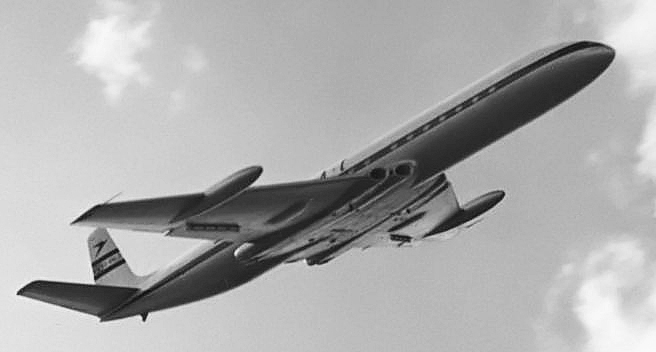
The De Havilland Comet was the first commercial reactor in the world, founded in 1949 and a legendary aura around him. With its characteristic square windows, which take us back to an earlier era, was capable of carrying between 36 and 44 passengers to over 800 km / h and distances up to 5,000 km the conditions of "luxury train" that were typical of those times. And integral pressurized cabin! The Queen Mother was one of its first users and the device caused a sensation among people around the world, through the colonies and former colonies of the British Empire. It was very popular in the South Atlantic routes. A symbol of the resurgence of imperial metropolis after the Second World War y. ..
... and then began accidents. The first was at the airport of Ciampino (Rome): failed to lift the aircraft and crashed at the end of the runway, but no one was killed. Soon after an accident occurred the same in Pakistan, killing all 11 employees company were on board: the first fatal disaster of a commercial reactor. It was established that the profile of the leading edge of the wings made it difficult to lift in certain configurations, and modified.
Then came the catastrophe.

Less than a year later, the BOAC flight 781 took off from Ciampino (Roma) in the direction of London. Twenty minutes later, broke up in flight with no apparent cause or prior notice, near the island of Elba. Killing all 34 occupants.
On April 8, 1954, it happened again exactly the same: the South African flight 201 departed from Ciampino to Cairo with 21 passengers, and never arrived. The Comet disintegrated over the Mediterranean in the middle of the night full of stars, without hitting anyone explain why.
Something very similar to panic spread the British Empire and the world. What was happening?
There was all kinds of editorials and rumors (which is as it was then to Conspiranoia). Many thought it was bombs. In any case, banned from flying to the entire fleet of De Havilland Comet until there is clarification about the facts.
Quietly, the British Admiralty was picking up debris from accidents with their military vessels, interviewing witnesses (particularly a group of Italian fishermen who had seen the first break) and talking to those who had listened to the radio communications of aircraft lost.
must note that in that time, no even the "black box" or anything.
However, the fishermen had caught in their nets fragments of 781 and some bodies flying. The forensic examination of the deceased revealed a common pattern: skull fractures and lungs burst, but not burnt. These lung lesions were consistent with explosive depressurization of the cabin in the absence of hot gases (not caused by a pump.)
With the prestige of the Empire in question, is research commissioned Abell Committee, chaired by Lord Brabazon of Tara, a renowned aviator. The fragments were transported to the then Royal Aircraft Establishment at Farnborough, and was first performed the laborious task of "reassembling the remains as a puzzle."

From this discovery began investigating the doors and square windows, finding the structures at the corners were subject to pressures much higher than expected due to the concentration of forces: above 40,000 psi. This enormous pressure also moved to the fuselage without there is no mechanism to alleviate it.
Finally, it was established that the breakdown of the Comet was due to a problem of fatigue of materials in the structure of the windows and fuselage, and particularly to a skylight that had been in the top as a courtesy to passengers.
After undergoing many changes, the De Havilland Comet flew again and never returned to accidents outside of the ordinary. But his legendary aura had turned into tragic aura. Will never again be a reference plane, and the arrival of the Boeing 707 ended up destroying its commercial position. Between this and other failures, particularly the Blue Streak missile, De Havilland eventually disappeared in 1964. BOAC, in turn, end up merging with BEA in 1974 to form the modern British Airways.

modern research.
Today, the investigation of air accidents and incidents is a standardized and regulated process, common to most developed countries. Essentially, is to reproduce with the highest possible accuracy and certainty the sequence of events leading to the event. As it is reported the incident, the area is secured (unless the device disappears into the sea or something) and proceeded to conduct a series of techniques that occupy many areas of reality.
One of the most thankless and least known is the verification of the documents. Only suitable for bureaucrats with spurs, is to check every paper related to flight from the cargo manifest to repairs and maintenance or licensing of pilots. Often these documents need to track the length and breadth of countries and continents, but quite often this effort brings its reward: parts pirates, smuggling dangerous cargo, excess weight, irregular patches, unqualified personnel, et cetera.

However, you sometimes see, hear or know things that can not be recorded on any machine, or that have been lost in the accident itself. In general, talk to the crew, drivers and other technical personnel as well as non-professional witnesses they were in a position to do something relevant (the surviving passenger is usually not in this position, but according to circumstances they can also interview .) These conversations should be kept as delay, as is well known that as time goes on people tend to remember less and play more, and the investigator does not need interpretations or opinions, but facts accurate.
Other specialists they have gone and with the physical part of the remains found. These specialists are mainly of three types: forensic engineers, forensic specialists and flight recorders ( "black boxes" ). Forensic Engineers (also physical and chemical) will attempt to distinguish which component materials may have had some connection with the accident, and how. Medical examiners, to study bodies, provide ample evidence of the sequence of events, the highly developed legal medicine and the human body, through its various compositions, is a very good record everything that happens. The flight recorder specialists try to decipher the words and data they recorded.

Sometimes when nature of the incident and understand the difficulty of justifying the high cost, the aircraft recomposed from the remains found. At least as far as possible. The purpose of this technique is allowing researchers a more intuitive physical evidence. For example, a broken pipe and burned divided into a pile of boxes at first glance becomes a witness to a flare when the pieces are put back in place. Today, you can be part of this reconstruction in a virtual way, by computers, but for more complicated cases, the practice of traditional recomposition. This technique is very expensive and slow, therefore only be applied when deemed really necessary.

This final report contains a number of causes of loss (if they have been unable to solve), usually separated into primary causes (which directly caused the event) and contributory causes (which facilitated to occur). Today, it is extremely rare for an aircraft accident resulting from a single cause, there are very few things that can shoot down a plane by themselves in our time, unless violence. In the vast majority of cases, we will find a combination factors that led to disaster.
And finally, the meaning of all this: the final recommendations, which generally will become mandatory guidelines. Identified primary and contributory causes, it is possible to make these recommendations to prevent them in the future. It is these recommendations that save lives but without all the previous work, it would be possible.

This is an unavoidable question on these issues, so I raised it myself. :-D
There is no answer to this question. Depends on accident, and every accident is a world no more safe than any other position above the margin of statistical error. So you can not answer. In general, the safest state is to stay inside the aircraft buckled while it maintains the integrity and there is no explosion, and thrown out when there are explosive disintegration near the ground. Of course, this is not something you can control, and the second case depends entirely on chance.
sometimes claimed that the tail section is marginally more secure, being away from the typical primary impact areas (which are usually in the front) and areas where large amount of flammable and potentially trigger (the wings and tail section). However, numbers in hand, this view is untenable. It is absolutely true that on a plane together and we all share the same fate, from the commander in his command post to the TCP that sits on the bench that rare in the kitchen of the fund.
For the same reason, the technical investigation of these claims is so important. Whenever metal wings are separated from the soil, who go on board (and those of us below) are living longer because others died and from beyond death, we whispered a story. They told us how they went, what wind carried them away. And the only able to hear this story from beyond the grave and put black on white on paper so we can all learn and live are air accident investigators, a complex, difficult, demanding, sometimes terrible and often subject to great pressure, but vital . Literally.


0 comments:
Post a Comment