Cryopreservation cryonics and suspended animation.

They found four hours later converted into a tiny pile of blue meat in the snow and ice, with a body temperature of 16 º C. Was, of course, clinically dead, had at least two hours from cardiac arrest. But as an attempt in extremis of CPR got some result, was sent with the utmost urgency to University of Alberta Hospital in Edmonton . There, with advanced techniques and comprehensive intensive care experience in cases of hypothermia, managed get through.
Today, Erika is ten years old and remembers nothing, she was too young to remember, but it's okay, do not need any tip and no sequels have been. As always in these cases there was talk of miracle (then, these other what were they?) And even dedicated a song . Erika crawled to the cold and died and came back from the dead clutching the hand of science. And she, in turn, give a gift to science: the clear demonstration that it is possible to die of cold and return with no significant damage. That ultimately suspended animation could have a chance beyond the pure science fiction.
die and not-die from the cold.

However, Mitsutaka was not dead. should have died for at least half a dozen reasons, including hypothermia, dehydration, internal bleeding, fat embolism and starvation, but exhibited some striking, very weak, and a body temperature of 22 º C. Taken to a hospital Kobe also fully recovered from his injuries and being exposed to the weather with temperatures so low. In his case did not die as Erika-held small cardiopulmonary activity, though reduced to a minimum, "which is, if we, almost more amazing. He stated that "on the second day, the sun was gone ... I was in a field, and I felt great. That's the last I remember."

In general, hypothermia is an old enemy that we carried with ease and a strange sweetness that feel good that he mentioned our surviving Japan. Always has been called sweet death , because apparently there is a moment you stop feeling the awful cold and it is replaced by a kind of drunkenness very nice, strong signal that you're dying. It is rare to find a frozen smile on his face, which many believe rictus, but according to those who have survived would correspond rather to the unique buzz. And no clothes: for some reason unknown brain, paradoxically tend to undress when we're dying of cold. Beyond
clinical death, when the activity is stopped, the frozen tissue cardiopulmonary really slow in die altogether. In fact, what happens when we freeze is a gradual slowing and eventually cessation of metabolic processes that keep us alive but also of death (as both are nothing but chemical reactions can only occur within a certain range temperatures, like any other.) Thus we have a kind of paralysis induced, allowing some animals evolutionarily adapted normally frozen and thawed.

As the temperature continues to decline and low of zero degrees, there is another massive and permanent damage, cell destruction. On the one hand, ice forms between cells, separating them and causing damage to mechanical and chemical. On the other hand, if the freezing rate exceeds the loss of water by osmosis to the intercellular spaces, cytoplasm forms crystals that disrupt the cell membrane and irreversibly damaged. A frozen body, despite its appearance probably healthy cells is destroyed and can not be recovered. is definitely dead. Cryopreservation
.

Organs for transplant are also often transported refrigerated (not frozen). At present, various medical techniques to cool the patient and slow down their metabolism and the damage caused by a disease process while trying to correct, as, for example, hypothermic cardiopulmonary therapy.
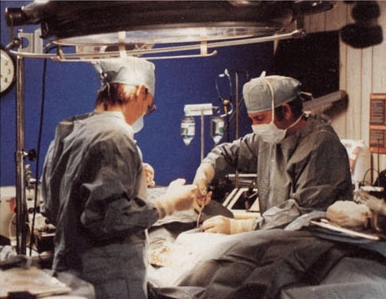
The reasons to investigate these techniques are varied and powerful: the ethical obligation to protect the life of a patient by any means possible until you see the future in a way cure him doing so until it is found a way to stop or reverse aging, facilitating long-distance space flights or other activities of very long duration; advancing emergency medicine, dramatically improve conservation technology for transplantation, allowing and the emergence of organ banks much better than today, and many others. His critics are also diverse and strong, ranging from many fields of science (who consider it a remote possibility in the future and the current commercial offerings, a simple fraud) to religion, always suspicious to all these questions of life, death and reproduction radically beyond their traditions and skills.

The preservation of the body and its conditions can be affected by many frequent events in human history, such as wars and revolutions of importance or social, political, ideological, religious and economic. The fact that now these attempts are a thing of private entities increases the uncertainty, because they are typically subject to market fluctuations, fashion, changes in economic and political model or simple matters of success and failure. The greater the delay before resuscitation, the greater these uncertainties: the Egyptian pyramids have lasted four and a half millennia, but its contents were looted before that after the first (and for that reason the following pharaohs chose to hide their burials in remote deserts as the Valley of the Kings , with similar success: none). And that this was a uniquely stable and orderly society, more slow and a much longer duration than any of the modern.

all this, of course, is that experimentation is applied the most tricky. In all countries, to freeze a human being to stop not revive immediately below is-just-murder. And if not, by incorporating a voluntary waiver, and ethics committees would be willing to throw their hands in their head. This means that only you can freeze a body , a concept that can vary by country, generally accepted customs and practices, but it always involves previous cardiac arrest and death certificate. In the same way is not allowed euthanasia in most countries as much as the patient's request, nor allows cryopreservation in vivo (for legal purposes, it would be a form of euthanasia, there is no legislation providing for a third state suspended live well or dead , and someone who does not breathe or beats or brain activity has been technically dead , which would find to a murder by euthanasia ).

But cryopreservation is advanced enough to begin to address these problems? Depends on who says it. The mere fact that these investigations are so severely restricted, of course, slows the entire discipline. At present there is a clear demonstration that a person can stand cold -like little Erika, which is not the only, without suffering brain damage worth mentioning. In parallel, we are working in so-called vitrification techniques and the use of cryoprotectants (chemicals similar to those naturally occurring beings are capable of frozen and thawed without damage.) But if someone raises the question directly "Is it possible today to freeze a human being with a reasonable expectation to revive in the future?" the answer is "probably not" .


0 comments:
Post a Comment