Although not named Paul. :-D

Octopoda.
Octopuses are mollusks such as mussels. An individual lives between six months and five years, according to species, and can range from a few centimeters in length to over six meters North Pacific Giant Octopus . Some raw cuttlefish, which share many of their characteristics, they can at 13 or even 14 meters . To reproduce, males inserted under the mantle of the female arm like a penis called hectocotylus (which is also removable and regenerated), which surely inspired many Japanese mangaka. This specialized arm deposited packages sperm inside the female, fertilize it with several hundred thousand eggs. The females are genetically programmed to die shortly after reproduction, and males do not last long after mating. The young, in the form of larvae, spend some time drifting in clouds of plankton before descending to the seafloor to develop and begin the life cycle again.
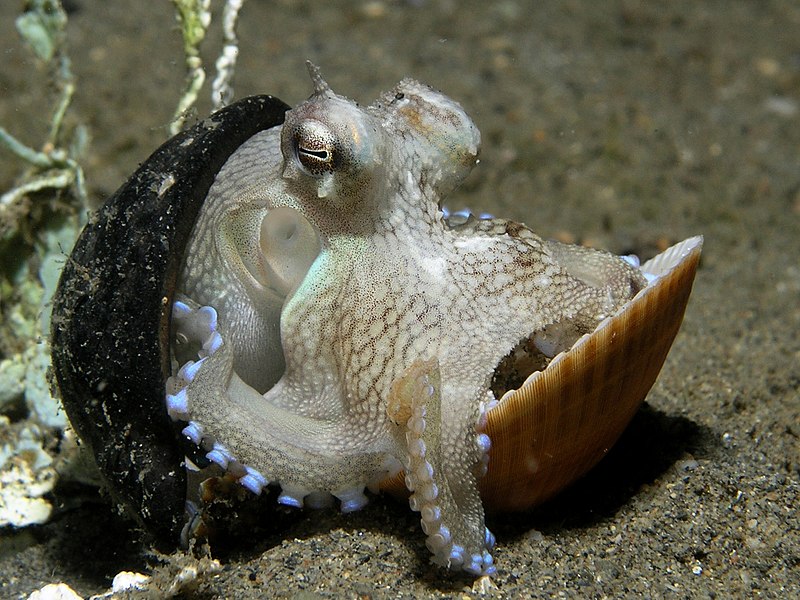
Yet they are manifested in striking phenomena of convergent evolution: cases where certain organs evolved independently in widely separated organisms. One is the presence of two large compound eyes and fitted with a single lens, like ours. Much like ours, but not quite, human eyes are much more flawed and unnecessarily complex in its distribution.
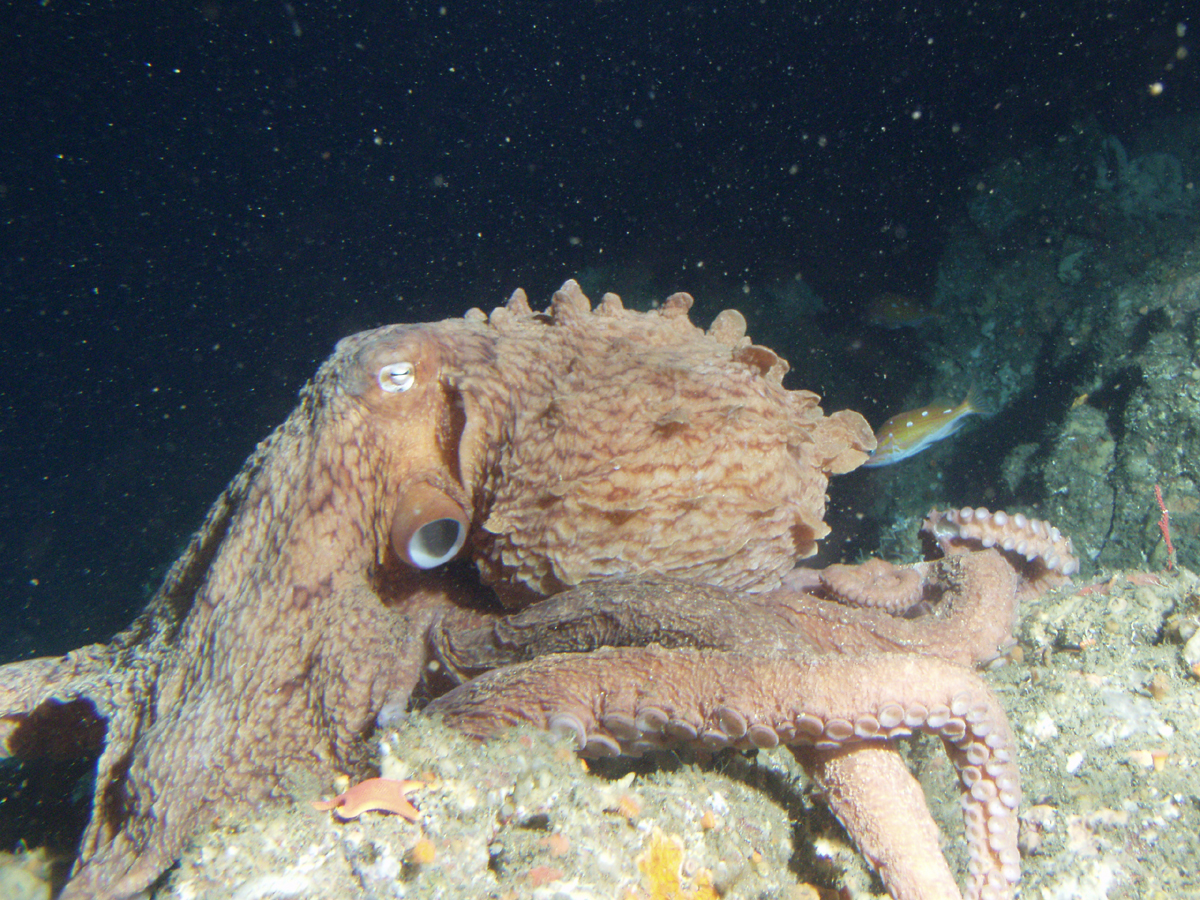
This is another unique feature of the octopus, can change color and overall skin appearance with amazing speed, either to hide or intimidate. When compared to a chameleon, for example, the octopus makes it much faster and with a variety of colors and shapes much higher. For it has a lot of specialized skin cells called chromatophores . In the case of cephalopods, these chromatophores can produce polarized light patterns at precise angles, which can only be captured with an eye capable of distinguishing this property. We can not do without technology tools, but they do, what might constitute an effective channel of communication camouflaged with other individuals of the same species.

Come on, that octopuses are far more than just a dish with potatoes, paprika, coarse salt and a drizzle of olive oil. We are facing a extraordinarily complex and sophisticated animals, perfectly adapted to the survival of amazing ways that have not needed to adjust much in the last 95 million years. And we are in the most advanced intelligence everything but breathe air on this planet. A different kind of intelligence, strange, sometimes can make your hair stand on end, and invites us to dream. Or nightmares.
foreign intelligence.
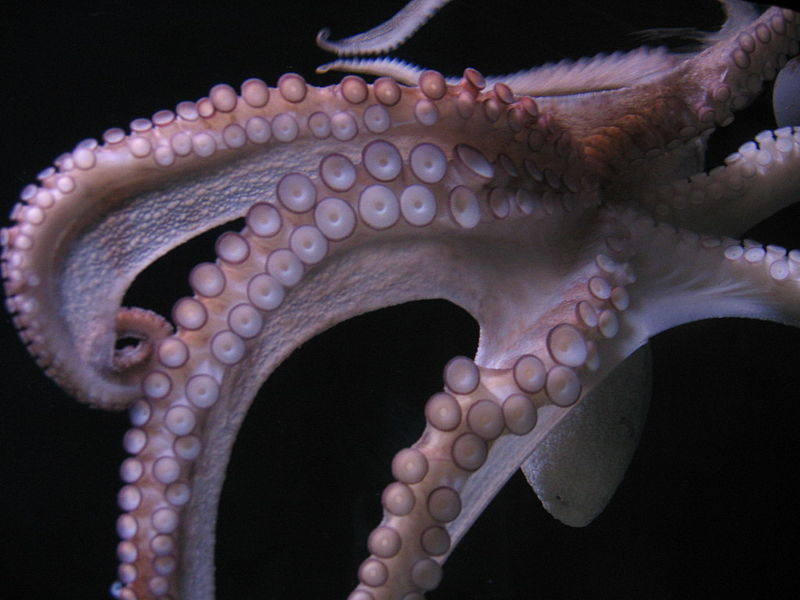
One of the first things that attract attention by looking at an octopus is his skill. Move those his eight arms, and the rest of his body with exceptional skill and speed. The strange thing is that no stereognosis and presents a collection of his own body movements very low despite its excellent tactile sensors, so it uses the view to check and calibrate their positions permanently. It is known that escape easily from any tank that is not tightly closed, sometimes causing a disaster, but also are able to perform complex actions that do not occur in almost any other part of the animal kingdom. For example, opening a bottle with screw cap, bottles and all kinds of containers if they find appetizing what's inside:
We have already mentioned their hunting skills, which in some species of cephalopods involve complex group behaviors (although they are generally more solitary animals). And his ability to communicate through color changes in a kind of sepia-a closely related animal-evident capable of transmitting two different messages to two different individuals .
All this tells us a clear ability to solve complex problems, which is perhaps the most indisputable manifestation of intelligence. And for that, are able to manipulate tools. For example, here is an octopus venous using a coconut as a shield and shelter:
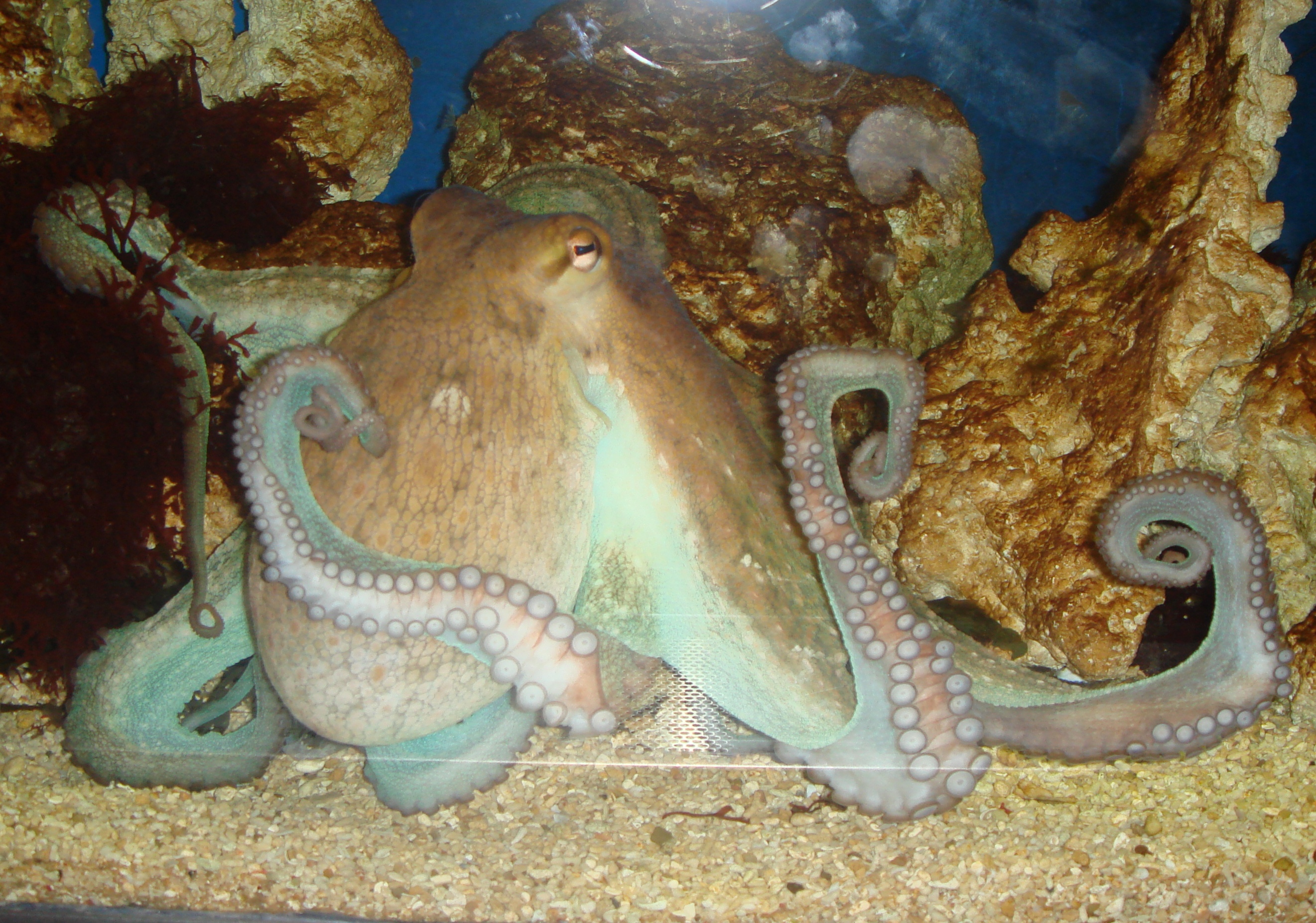
Moreover, this being you write is certainly fond of fairs and grocery stores (which in Spain we call shop, Latin American reader, that is, an inn that specializes in octopus). What happens is that sometimes, looking at beating the bug in the traditional style, boiled, cut up his body and other things to eat, I can not help a shiver (especially when I already somewhat loaded albariño ). And ask with a nervous giggle if not we will be gobbled up a remote cousins-by-evolution ever dominate the world. Especially if we consider that some of them are superpredator and they all have very, very good memory. So, Paul, good roll, eh? ;-)


0 comments:
Post a Comment