Smallpox ate us up by their feet over the millennia, leaving millions dead and blind to the year-especially kids-
until an international initiative in the twentieth century managed to completely eradicate from the face of the Earth
a wonderful demonstration of what we can do when we come.

small shredder and large.
The first known epidemic of smallpox occurred around 1320 BC, during the wars between the Hittite empire of King Shubiluliuma I and Egypt's pharaoh Ay . Egyptian prisoners spread the disease to soldiers and civilians Hittites, who soon became a huge death toll, ranging far and wide as a divine curse. Shubiluliuma I killed himself, with his son and successor Arnuanda II.
During the first millennium BC, the Egyptians and Levantine traders carried the disease to distant lands and especially to India, where he became a relentless scourge throughout of three thousand years. But it also extended through Europe without any problems. It was during the epidemic in Athens 430 BC when Thucydides first observed known that those who survive the disease no longer have to experience again: the first indication of theory of immunity.
But did them much good. Smallpox continued charging millions of people everywhere and leaving many others blind. Between 165 and 180 AD, the Antonine plague (or plague Galen ) caused extensive damage to the army and the Roman Empire, it is believed that up to two emperors could die for this reason. Killed between three and seven million people and many authors consider it a giant step in the decline of the Empire. During another epidemic, in 540, Bishop Marius of Avenches christened as smallpox (which can come from Latin varius , spotting, or varus , "boil"). In 754 severely beaten in the East, taking also through the first Abbasid caliph, Abu As-Saffah . Around 950, the great Persian scientist Abu Al-Razi conducted the first comprehensive description of the disease.
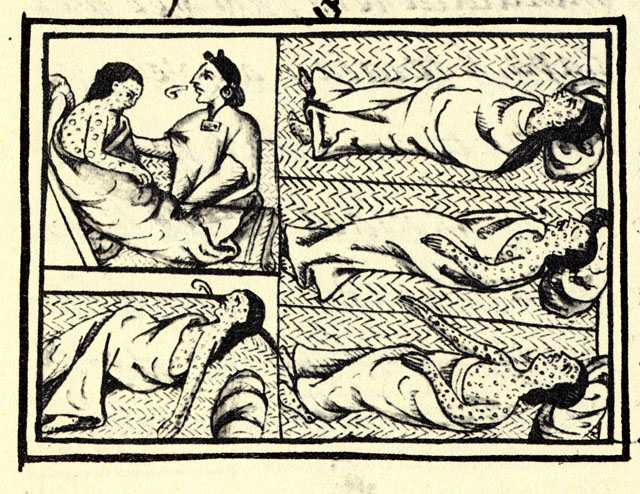
this side of the pond, smallpox continued to make mischief with the same enthusiasm as ever. On with the monarchs, to get an idea: the King of Siam Boramaraja IV in 1534, the King and Queen of Kandy Ceylon and all his children in 1582, Prince Baltasar Carlos , heir to the throne Spain, in 1646, Orange William II and his wife Henrietta Stuart in 1650, Go-Komyo , Emperor of Japan, in 1654, the Emperor of China Shunzhi in 1661, the Queen Mary II of England in 1694; Nagassi from Ethiopia in 1700; Higashiyama of Japan in 1709, the Holy Roman Emperor Joseph I in 1711; Luis I of Spain 1724; Tsar Peter II of Russia in 1730 ; Leonor Ulrika of Sweden, in 1741 or Louis XV of France in 1774. During the eighteenth century, four reigning monarchs Europeans died of the disease and the line of succession to the throne of the Hapsburg changed four times in four generations because of the death of crown princes. It is for this ability to ventilate the kings and emperors As commoners and babies also received the name of Rex Variola . Among other notables who contracted the disease but survived are neither more nor less than George Washington, Abraham Lincoln , Wolfgang Amadeus Mozart, Ludwig van Beethoven or Joseph Stalin. And even Lucky Luciano.
Minister The most terrible death.

Smallpox raged especially in the little people, who had not yet developed defenses, you've probably been the biggest killer of children throughout the history of mankind. was something I had to go , such as mumps and measles ... but with a rate much higher mortality and blindness, not to mention the disfiguring marks on the face and body. In India, children are not I put the name until they had passed and in Europe, Conde de la Condamine claimed that "no man dares to tell a child as his own until he has had the disease" . For all these reasons, the historian Thomas B. Macaulay described it:
"Smallpox was always present, filling the cemeteries corpses, tormenting with constant fear all that was beaten, leaving those whose lives were spared the hideous traces of its power, making the child a monster to which the mother shuddered, turning her eyes and cheeks of adorable girls into objects of horror to their Lovers [...] [was] the most terrible of all the ministers of death ... "
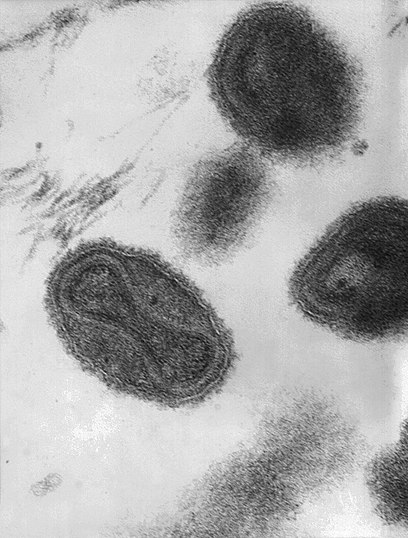
From there, through the lungs, smallpox extends throughout the body, but rather placed on the skin. For a few days the infection is slowly passing from cell to cell. This virus is also unique because it is the only DNA that is reproduced in cytoplasm rather than in the cell nucleus. The incubation period of twelve to fourteen days, no symptoms and the patient is not contagious.
But then the cells where it has been playing begin to burst, releasing thousands of millions of new virus and the disease begins to manifest. This results in a prodromal period of two to four days during which symptoms appear confusing, such as high fever (over 38.8 º C), exhaustion, malaise, and headaches and back. At this stage, the infected person is moderately contagious.
is from the time when the rash appears (although in rare cases does not take place, these cases were fatal always necessary), usually starting at the mouth and palate and spread quickly throughout the body. The rash takes the form of a myriad of patches, called macules , giving the characteristic appearance of disease (and leave those terrible marks). These spots are most notable in the face, head and distal parts of the limbs, although also listed a few in the rest of the body. During this phase, the infected person is extremely contagious. Smallpox serious
courses in four different varieties, and not well understood mechanism by which a patient suffers either. These varieties are:

- Regular (over 90% of cases). On the second day of the eruption, the spots are raised and are becoming deeper pustules that give the disease its characteristic appearance (and then leave marks.) Because there are so many, sometimes even to join together and separate the skin from the flesh beneath: this is called confluent rash . Ten days after the eruption, these pustules mature and are bursting, releasing an opalescent pus-like fluid but it is not. After two weeks, have become crusted and begin to fall, if the patient has survived until then, it can be considered cured and non-infectious at the time of the last to disappear. Historically, smallpox had a normal mortality rate of 30% and if the eruption was becoming confluent, up 62% .
- property, very rare and benign, which occurs occasionally in some people already vaccinated. Often confused with chickenpox and rarely fatal.
- evil, in a little over 5% of cases and approximately 72% occur in children. In malignant smallpox pustules do not rise and instead remain flush with the skin, with very little liquid in it and sometimes blood. Traditionally it was said that the disease bursts, the disease stays in the body . Severe symptoms of sepsis . Malignant smallpox is almost always fatal.
- or Hemorrhagic smallpox , in about 2% of cases. More common in adults, is characterized by severe subcutaneous hemorrhages develop blackish-looking (and mucous membranes or the gastrointestinal tract). No pustules, instead, the skin appears burned. Its mortality rate is also close to 100%.

The ancient art of variolation .
discuss whether he was first in India or China, but someone had to watch as well as the Greek Thucydides: if you can survive the smallpox, and not come back to suffer. This brilliant unknown also reached a conclusion: when a person is exposed to a mild infection of the disease, which did not come to kill her or leave her blind, then it was protected from that moment.
And for the first time in human history, that yes served to something. From about 1000 AD, arise in different Asia techniques variolation or inoculation. A primitive horse between religion, science and art, many Asian chief physician of antiquity began to expose people to softened forms of smallpox in the hope that this would prevent its development in the future.

variolation or inoculation
This was extremely dangerous, because there was no way to control the virulence of the material and the same could be completely ineffective to cause malignant smallpox. It was that time of statistics or double-blind, but the technique was spreading throughout Asia y. .. worked, at least in part. It was a Russian roulette, however, saved more lives than it ended. Over time, was improved even more. From the eighteenth century, some European physicians who moved over there began to write to their professional associations publicizing this procedure Eastern dreadful disease in the West continued to air out the crowned heads both the humblest and baby.
Feminist adventurous, the Puritan pastor, the doctor brave and enlightened rationalist.

While residing with her husband, ambassador to Constantinople, Lady Montagu noted Turkish doctors practicing inoculation on the people there. Determined to keep his own offspring contrajese disease asked the doctor at the embassy that variola to his five years in 1718. In 1721, returning to England, did the same with her four. Neither contracted small pox.
As a result, Lady Montagu began to speak of this new-old technique to the whole world and encouraged in the UK. King's physician, Sir Hans Sloane are very interested and came to an agreement with six death row waiting to be hanged in a prison: his freedom in return for being inoculated and then exposed to smallpox. Many doctors attended the experiment was a success: six survived. In 1722, the daughters of Prince Wales were also inoculated.
is curious that the procedure came to America for a different street on the same dates. In 1706, a black slave named Onesimus Sudanese source told the influential Puritan minister Cotton Mather the way had been inoculated by the people in Africa, as a child (and free). Smallpox was a serious problem in America, not only among the native populations, to which had swept, sometimes accidentally and deliberately others through the dissemination of infected clothing, but also between the European settlers. Mather was left with the idea and read references to the practice also texts from Constantinople.

the technique to other 242 people, of which six were killed: around 2%. In contrast, of the 6,000 people who had been infected in the same period the natural way, killed around a thousand: 14%. No thanked him, and Dr. Boyston suffered not only violence but also the fact they did stop, there remains only released on a promise not to do it again without government authorization. For his part, Pastor Mather was the victim of furious invectives at the hands of his fellow Puritans.
But technology continued to expand its evident effectiveness. In France, the enlightened rationalist Voltaire wrote ridiculing resistance of his countrymen to be inoculated (according to their figures, 60% of the population contracted the disease in both major and minor variant, and 20% perished.) Voltaire's texts were already very influential, and along the eighteenth century, many parents all over Europe began to variola their children. And for the first time, the most terrible Minister death began to recede.

However, inoculation was still very dangerous. It is difficult to bring your children to variola knowing that one in fifty will not survive the procedure (sometimes one in thirty). It is certainly better to end up losing one of every five or ten depending on the season, of course, yet it remains a harrowing experience and terrible. Yes, the past was shit.
This is where history comes in an English scientist named Edward Jenner . Jenner was a country doctor, linked to the Enlightenment. Treating patients in the countryside, saw something that had already found another before him: the girls who were engaged in milking the cows used to get the call cowpox, a skin disease relatively mild in humans, but rarely suffered from smallpox truth.
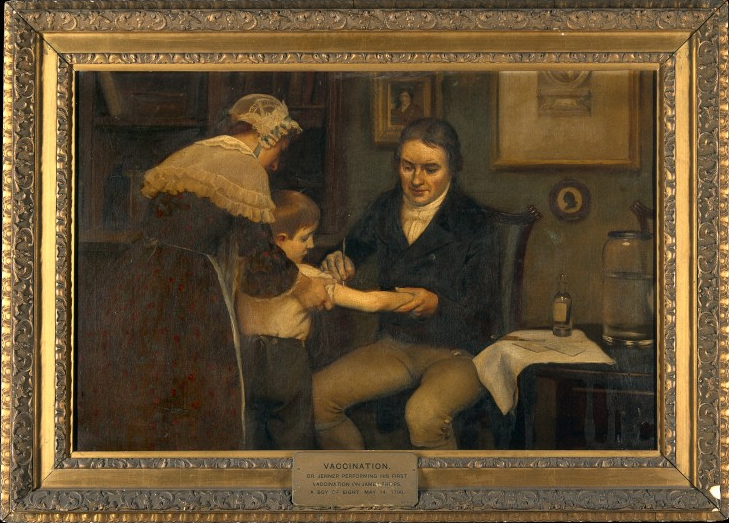
turns out that the virus causing cowpox is also a closely related orthopoxvirus that causes smallpox but causes only a fraction of their effects on people. However, contact with the same cause immunity against most of the orthopoxvirus family, including that of smallpox. So the girls who milked cattle never suffered, and this little boy did not Phipps.
Jenner called his method vaccinia, and variola vaccinae , or cow pox where he got the idea and the material. Furthermore, had shown that vaccinia could proceed directly from humans, not necessarily of cattle. Had been born the first vaccine. Vaccine, cow . First
eradications.

The states took matters into more and more countries and decreed mandatory vaccinations as a matter of public health. Thus, this ancient horror that had blinded and killed our children by millions since the dawn of civilization began to disappear from large areas of the world. In the wake of Jenner, vaccines soon arose many old curses more, typhus, rabies, diphtheria, pertussis, rubella. Things we ate in the millions and no longer do.
But smallpox as the cause of most infant mortality and historical blindness, it was still the greatest enemy to beat. During the nineteenth century, the cowpox virus used by Jenner was replaced by a slightly different version but still effective and safe, called vaccinia directly. And the old enemy is dissipated in the wind, at least in developed countries. A mid-twentieth century, both in Europe and North America and the USSR smallpox cases were already marginal. In 1950, a mass campaign developed by the Pan American Health Organization completely eradicated the disease in this continent, except for some residual in four countries. However, in other nations, especially African and Asian- Smallpox remained the same curse as always, despite their ancient techniques of inoculation. In the twentieth century, even killed between three and five hundred million people, mostly children.

The great idea of \u200b\u200bdeputy Viktor Zhdanov.
During the tsarist period, smallpox was in the late Russian Empire a constant shroud of death and desolation. After the Revolution of 1917, vaccination campaigns reduced number of cases to a minimum, so successfully that the Soviet authorities were very favorably impressed. However, the USSR faced a constant risk of reinfection from the Central Asia, mostly from Afghanistan and Iran.
And here we find another remarkable man, the Soviet Deputy Minister of Health Viktor Zhdanov, MD, former director of Ivanovsky Institute and member of the Academy of Sciences of the USSR (not to be confused with the marathon runner). For dealing with infectious diseases in the largest country in the world, Dr. Zhdanov was not Surely someone accustomed to thinking big. And he thought big, and very well.

"In 1806, the United States President Thomas Jefferson said in his letter to Jenner 'is thanks to his discovery that in future the world's people will know about this hideous disease, smallpox only thanks to the ancient traditions. "has now come the day to comply with his words. "
Over the next hour, Dr. Zhdanov beat out a sophisticated global plan to eradicate smallpox from the planet Earth during the next five years. Zhdanov's report proposed a huge campaign of vaccination and revaccination across the globe, starting with the regions where it was endemic. recommended that this campaign was mandatory in all countries, and suggested using a certain type of vaccine. He said that should be used something similar to the system used in virulent outbreak control, treating the world as if everything he was experiencing one of these virulent outbreaks. assured the Soviet Union's support to his proposal. And to prove it, put it on the table a team of nearly a thousand doctors and the first twenty-five million doses, plus another two that brought Cuba.
Many delegates seemed too optimistic, but many others seemed difficult to stay out when Zhdanov came to drop the USSR was already in contact with several governments to launch the program on its own initiative if it was not adopted. Was adopted, but only by two votes. The historic declaration WHA11.54 of the World Health Organization's plan Zhdanov collected in full, with some minor modifications, and from 1959 he began implemented.

The mission of Dr. Henderson persevering.
were many people of all nations participating in the WHO Zhdanov plan to eradicate Earth pox. Could not be in five years, but in fifteen. Among all these people stands another doctor, in this case U.S.: Dr. Donald Henderson. Donald Henderson, an epidemiologist, was the head of the eradication program under the plan Zhdanov from 1967, at the time, yet two million people died of smallpox every year. And traveled the world bit by bit as they say, to ensure that there was not a single case of smallpox anywhere.
During the 1974 outbreak in India, the worst of the twentieth century, which suggested to many that the plan was failing Zhdanov, "Henderson saw an opportunity only to strike at the heart of smallpox in his lair deep and endemic, where it was considered a natural fact of life. They threw the rest. Later this year, the American doctor from New Delhi declared:
"If the interest and concern for end to smallpox can be maintained over the coming months, it is made. We do not believe that we are being too confident. Around June 1975, we expect to finish with smallpox in Asia. "

And again. It's over. Smallpox had been eradicated from the face of the Earth. Our old enemy, Rex Variola , Was no more. Countless generations were safe at last.
Atlanta, Novosibirsk.

The truth is that despite its danger, smallpox is not an optimal candidate for biological warfare because of three reasons: their limited survival time outside the virus-friendly environment, the absence of parallel reservoirs and human beings themselves certain probability that the infection to spread uncontrollably, damaging also the attacker, on the other hand, would be quite easy and quick to inoculate the troops and the population as was done to eradicate it. These characteristics make its militarization, dispersion, control and effectiveness. Not impossible to overcome, and also talk a virus with extensive possibilities of genetic modification, but of course there are better alternatives .
If it's any example, in 1972 was the last outbreak of smallpox in Europe, six years before its eventual eradication worldwide. Occurred in the Yugoslavia of Marshal Tito , where the disease had already been extinguished long ago: an Albanian Muslim pilgrimage was a Muslim holy city and had something to do other than a pilgrimage, because he got a super variola major ( at that time was already too rare in Arab countries). The fact is that on his return spread to a total of 175 people, resulting in 35 deaths.

If today "there are a lot of cancer" and those things said, is because we do not die and almost anything else and wait to kill us something we have not yet succeeded. Above all, we no longer children die like flies. The country in the world with the worst infant mortality rate of this (Sierra Leone, 160.3 per thousand) has half of which was in the heart of Europe or anywhere else in the world two centuries ago. And the vaccination, along with food and water security is the main protagonist of this wonderful work we still have complete.


0 comments:
Post a Comment